
What Is Kunafa? Ingredients, Taste, and What to Expect
How cheese and cream versions differ, what the pastry and syrup contribute, and which ingredients Arabisca lists for its Kunafa Cheese.
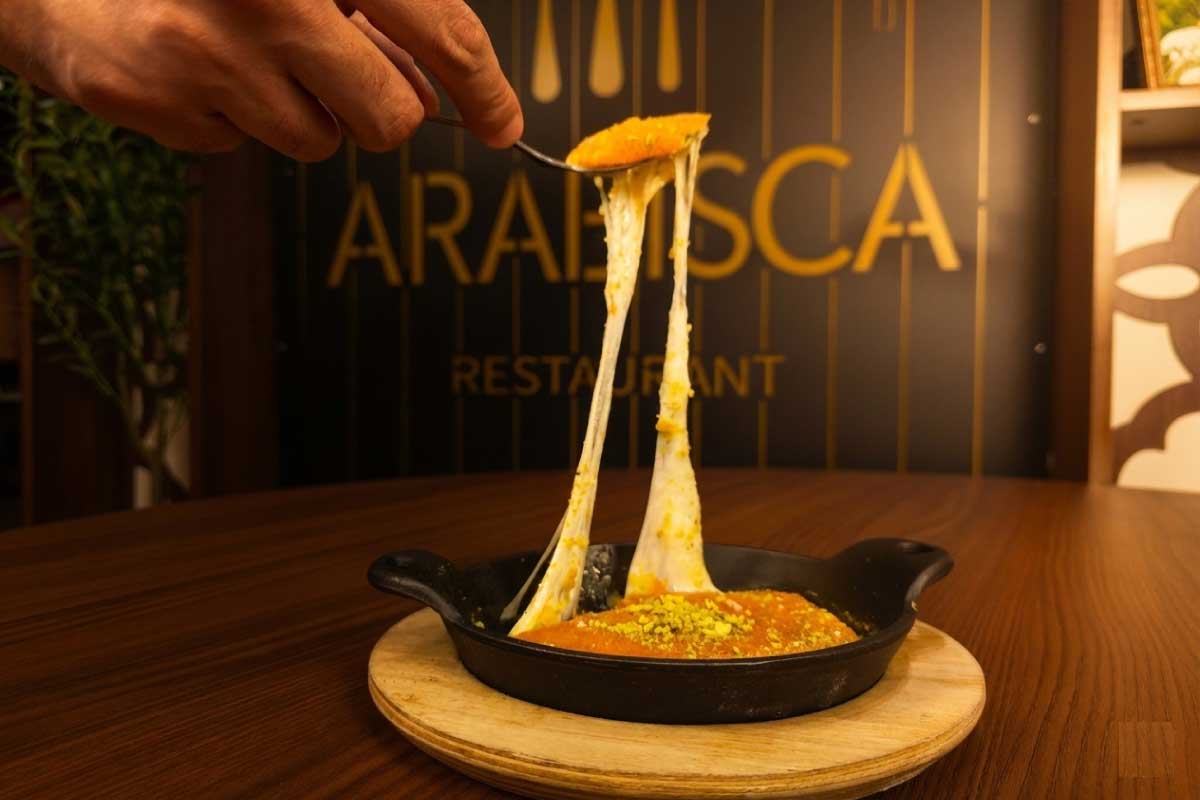
Kunafa is a Middle Eastern dessert that combines pastry or a semolina-based layer, sweet syrup, and a filling, commonly cheese or cream. You may also see it spelled knafeh, kanafeh or konafa. The spelling alone does not tell you which preparation a bakery or restaurant serves.
At Arabisca in Cypress, the Kunafa Cheese is described on the current menu as crispy pastry with Lebanese cheese and aromatic sugar syrup. Its listed ingredients are semolina flour, mozzarella, Ackawi cheese, ghee and sugar syrup.
What is kunafa made of?
Recipes vary, but three components explain most versions:
- Pastry or crust: many versions use kataifi, a dough formed into fine strands. Others use a finer, semolina-based layer. A smooth-looking slice and a visibly shredded one can both be kunafa.
- Filling: cheese versions often use mild cheeses such as Ackawi or mozzarella. Other preparations use cream, so kunafa does not always contain a stretchy cheese center.
- Syrup: sugar syrup supplies sweetness. Some recipes flavor it with orange blossom water or rose water; others do not.
What does kunafa taste like?
Cheese kunafa brings together buttery pastry, mild dairy flavor and the sweetness of syrup. The filling may stretch or remain softer, depending on the cheese and preparation. Cream versions tend to have a smoother filling. When floral water is used in the syrup, it adds an aromatic note rather than changing the dessert's basic sweet character.
How is kunafa different from baklava?
Baklava usually has layers of thin phyllo pastry and chopped nuts. Kunafa commonly uses shredded dough or a finer crust with cheese or cream. Both can contain syrup, but their fillings make them different choices: baklava is typically nut-forward, while cheese kunafa emphasizes its dairy filling.
Baklava is commonly served at room temperature, while cheese kunafa is often served warm. These are common practices, not fixed rules for every recipe or restaurant.
Why do kunafa styles look different?
The pastry's texture, the filling and the way the dessert is assembled all affect its appearance. A fine-textured crust need not resemble the strands of a shredded pastry version.
For one Lebanese cheese preparation, Maureen Abood's knafeh jibneh recipe uses kataifi, cheese and orange blossom syrup. She also describes serving knafeh inside sesame ka'ak bread in Lebanon.
Choosing kunafa at Arabisca
If you are choosing between a cream dessert and a cheese dessert, the menu's Kunafa Cheese is the cheese option. For questions about garnishes, syrup or preparation, ask the team rather than assuming every feature of a traditional recipe applies. If you have allergies or dietary restrictions, confirm ingredients and preparation before ordering.
See the Kunafa Cheese menu page for the current dish information, or compare it with the other options in Sweet Endings.